Lived experience first
Katakata is led by Deaf and Disabled people, and Deaf people are part of our paid team. The people closest to the barriers decide how we break them down.
Katakata is a Deaf- and Disabled-led community organisation, rooted in Brixton and South London, that brings people together across different backgrounds. We don't start with a programme. We start with a space where people feel they belong. Support, skills and leadership grow from there, and so does the push for wider change.
Five steps that happen in our space every week. People don't have to go through them in order. Some people just want lunch, and that's fine too.
Anyone can walk in. You can order by speaking, signing, pointing or writing, and nobody rushes you.
Doing now Two cafés open every day, and a weekly gardening session.
Coming back, being known by name, sharing food. This is where trust and confidence begin.
Doing now The garden, a monthly open mic night that has run for about four years, and our annual festival, which around 300 people attend.
Once people trust a place, they ask for help. We make sure that help is close by and accessible.
Doing now Advice and guidance, including in BSL, for approximately 5 to 6 people a week; a food bank used by approximately 30 people a week; and 55 meals a week cooked for Thames Reach.
Training, work and responsibility, with people who understand the barriers because they've faced them too.
Doing now Training and jobs in our cafés, and a monthly Job Club in Camberwell.
What we learn in the space should change how services, employers and decision-makers work with Deaf and Disabled people.
Planning or exploring Partnerships and research that carry what we learn beyond our walls.
Katakata is a word from Cameroon, where our founder Francklin Evagle comes from. For us, it means never giving up on people, on ability, on community or on change.
Francklin opened Katakata on Brixton Hill. While it was growing, he lost his sight. That gave him a deeper understanding of the people Katakata serves, and of what it's like when a system won't bend.
In 2025, Francklin was named one of the Big Issue’s Top 100 Changemakers (opens the Big Issue website), nominated by actor and Big Issue ambassador Rose Williams.
In February 2025, Katakata featured in a Channel 4 News report on the rising number of disabled people who can’t find work (opens Channel 4 News), highlighting our inclusive approach to hiring.
Our work with the Deaf community began with Silent Hands, an employment project supported by Lambeth Council. Katakata is Deaf- and Disabled-led: lived experience shapes how we welcome people and what we work for.
We believe people shouldn't have to change who they are to fit systems that leave them out. The system should change. Here, nobody is pitied and nobody is a project.
Deaf and disabled people often meet barriers in community spaces, services and work: phone-only services, no interpreter, noisy rooms, or being talked about rather than talked to. This is how we respond.
Katakata is led by Deaf and Disabled people, and Deaf people are part of our paid team. The people closest to the barriers decide how we break them down.
BSL, speech, writing, pictures or pointing. We adapt to you, not the other way round.
People come here to eat, work, learn and lead. Nobody is a case to be managed.
Food, advice, gardening, music and training happen in the same space, with people you get to know. Coming in for one thing can lead to another.
We work with the Jobcentre, Lambeth Council, Thames Reach, South London and Maudsley NHS Foundation Trust and local GPs, so people can reach support through a place they trust.
Meet Furquan, Diego and Kleyvis, in their own words.
Our space is where Deaf and hearing, disabled and non-disabled people meet as equals. That's where some of the most useful learning happens.
Doing now
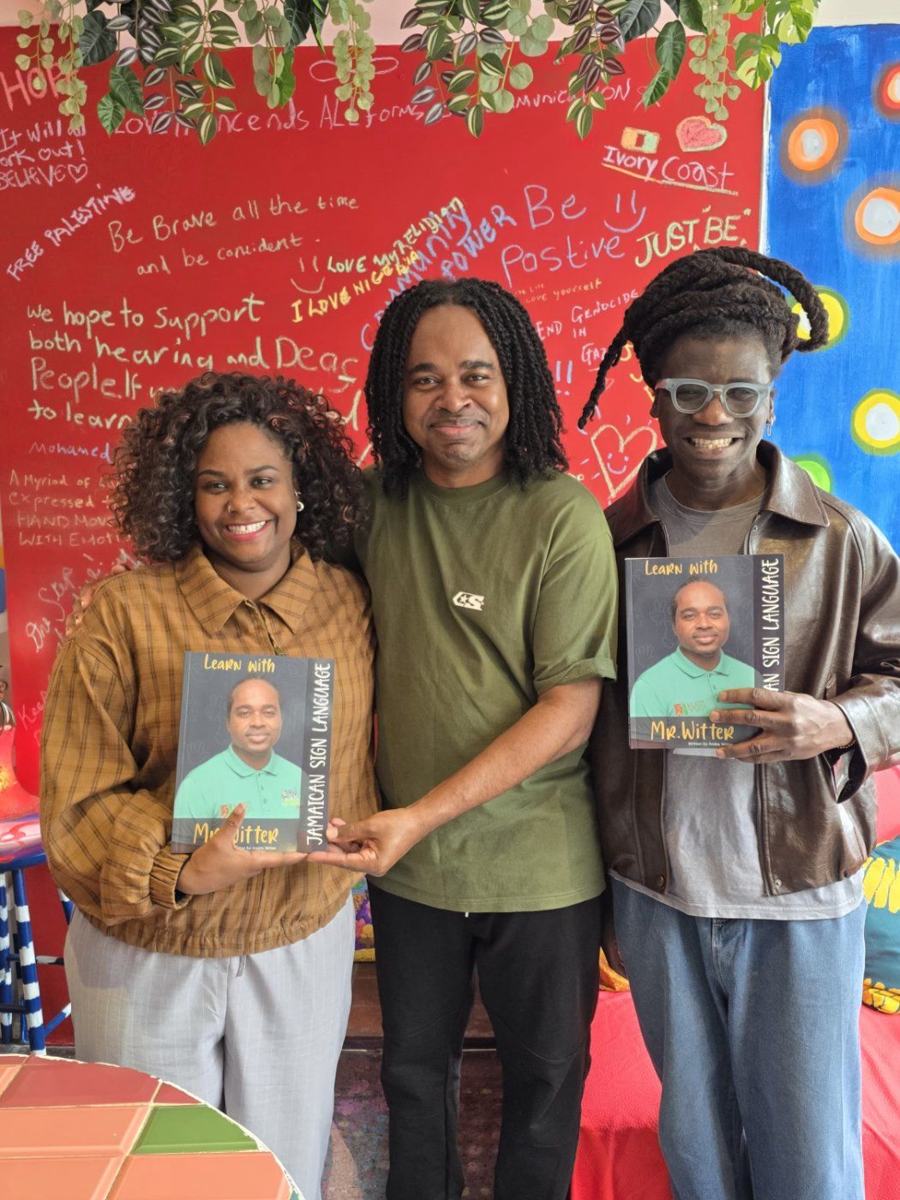
Three days a week, anyone improving their sign language can practise with Deaf people at our Brixton café.
Doing now
In our community garden in Brixton, people grow food and flowers together every Tuesday.
Evidenced
From November 2026 we will run Brothers Together, a social space in Southwark for Black men, commissioned by South London and Maudsley NHS Trust. It meets on the second Wednesday of every month, 2pm to 4pm, at Neurodiverse by Katakata in Camberwell. Referrals must come through a SLaM Southwark Community Mental Health Team.
Planning or exploring
We don't have research projects to show yet. What we do have is a trusted space, real relationships and years of practical experience of what helps Deaf, disabled and neurodivergent people belong, learn and work.
We want to work with universities, researchers and services on projects where Deaf and Disabled people help decide the questions, take part as co-researchers and share in what's learned.
Areas we'd like to explore include accessible routes into work, community spaces and wellbeing, and how organisations can communicate better with Deaf and disabled people.