
Visit the café
Work and training

Our employability programme and Job Club

Real work experience for Deaf and disabled people, in a small group, in our cafés. Learn by doing, with people who understand the barriers because they've faced them too.

In short

  • Small groups of four Deaf and disabled participants at a time.
  • Learn cooking, barista skills, customer service, communication and teamwork in a real café.
  • Referrals from the Jobcentre, SEND schools and other partners, or contact us yourself.
  • Training normally runs on Monday, Tuesday and Thursday, with the employability session normally on Thursday.
  • There is no fixed length. Each person moves on when they are ready, with a small graduation.
The programme

Learning in a real workplace

Doing now

We take four Deaf and disabled participants at a time. Participants learn in our cafés, alongside our team, serving real customers.

They build practical skills and the softer skills that matter at work:

  • Cooking and food preparation
  • Barista skills
  • Customer service
  • Communication
  • Teamwork

Training normally runs on Monday, Tuesday and Thursday, and the employability session is normally on Thursday. There is no fixed length: it depends on each person's abilities and progress. When a participant is ready, we hold a small graduation to celebrate, and then we welcome someone new.

The programme is about building skills, confidence and experience. We can't promise a job at the end, but we'll talk with each person about their next steps.

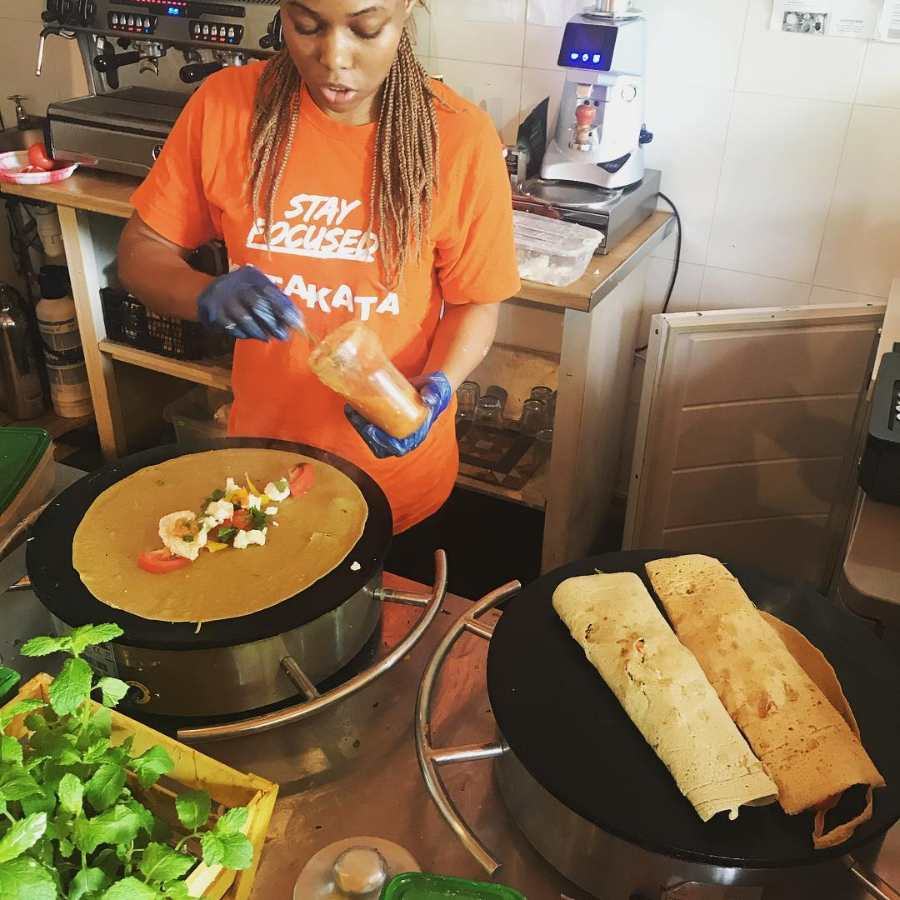
A cook in a Katakata T-shirt makes a galette on one hotplate while two rolled galette wraps wait on the hotplate beside her.
Why it matters

Skills, jobs and leadership

Many Deaf and disabled people are shut out of work, not because of their skills, but because workplaces aren’t set up for them. At Katakata, Deaf and disabled people work, train and lead. We use our own experience to show what an accessible workplace can look like.

Paid work
10 out of 12 employment pathway participants moved into paid work: six into paid roles at Katakata, such as cooking and serving customers, and four with other employers.
Trainees
Our employability programme takes 4 Deaf and disabled participants per group. That is the size of a group, not a count of people trained.
Job Club
A monthly session in Camberwell, on the third Thursday of every month, 1pm to 3pm, for anyone looking for their next step into work.

In February 2025, Katakata featured in a Channel 4 News report on the rising number of disabled people who can’t find work (opens Channel 4 News), highlighting our inclusive approach to hiring.

How it works

Five steps

You can contact us yourself, or a referral partner can contact us for you, with your permission.

  1. Get in touch

    A participant, or a referral partner such as the Jobcentre or a SEND school, contacts Katakata.

  2. Talk with us

    We talk about the person's interests and any support they need, in the way that works best for them, including BSL.

  3. Join a small group

    The participant joins a group of four. Training normally runs on Monday, Tuesday and Thursday.

  4. Learn by doing

    They develop skills through practical experience in a real café: cooking, barista work, customer service, communication and teamwork.

  5. Graduate and plan next steps

    When they are ready, we celebrate their progress at a small graduation and talk about what comes next.

In their own words

Furquan, Diego and Kleyvis

Three people from Katakata, in their own words, shared with their permission. Everything below comes from what they told us or said on film. These are personal experiences, not measured results.

Furquan

Barista at Katakata

“I enjoy working at Katakata, especially making cappuccinos and working with the team. I have learned new skills and I am proud of the progress I have made. Frankie gives me clear instructions, and that helps me at work.”

“In the future, I would like to become a supervisor or manager and one day run my own café or barista business. My message to others is: never give up.”

What he enjoys
Making cappuccinos and working with the team.
What helps at work
Clear instructions from Frankie, which is what the team calls Francklin, Katakata’s founder.
What he’s proud of
Learning new skills and the progress he has made.
What’s next
Becoming a supervisor or manager, and one day running his own café or barista business.

His message to others: never give up.

Diego

Took part in Katakata’s programme

“I came to Katakata through a DWP referral and really enjoyed being part of the programme. While I was there, I discovered how much I love photography. I used my photos to document the programme and created a book from them. The experience helped me build my confidence, and now I want to take my photography further and develop it into a career.”

How he came to Katakata
Through a referral from the DWP.
What he discovered
A love of photography. He used his photos to document the programme and made a book from them.
What it meant to him
It helped him build his confidence.
What’s next
Taking his photography further and developing it into a career.

Ask about joining the programme

Get in touch

Three ways to start

Email admin@katakatabrixton.com or phone or text 07534 329883. Tell us how you like to communicate.

Refer someone

Jobcentre, SEND schools, support workers and other services: refer someone, with their permission.

Refer someone (opens email)
Job Club

Job Club in Camberwell

Doing now

Third Thursday of every month
1pm to 3pm · Camberwell

Run with the Jobcentre. Get help with CVs, applications and your next step into work.

Brixton Job Club with DWP: postponed. Our Job Club with DWP for Deaf and blind people at Katakata Brixton has been postponed until next year. Please keep an eye on this page for updates. This is separate from our Camberwell Job Club, which is still running.

Need help with something else first, like housing or forms? See advice and support.

What we're exploring

More skills, more jobs

Planning or exploring

We are exploring plans for a new kitchen, subject to approval. A kitchen would let us cook more than galettes and crêpes and train people in more kinds of food work.

We're also exploring how our Deaf-led video work could grow into training and paid work for Deaf and disabled people.